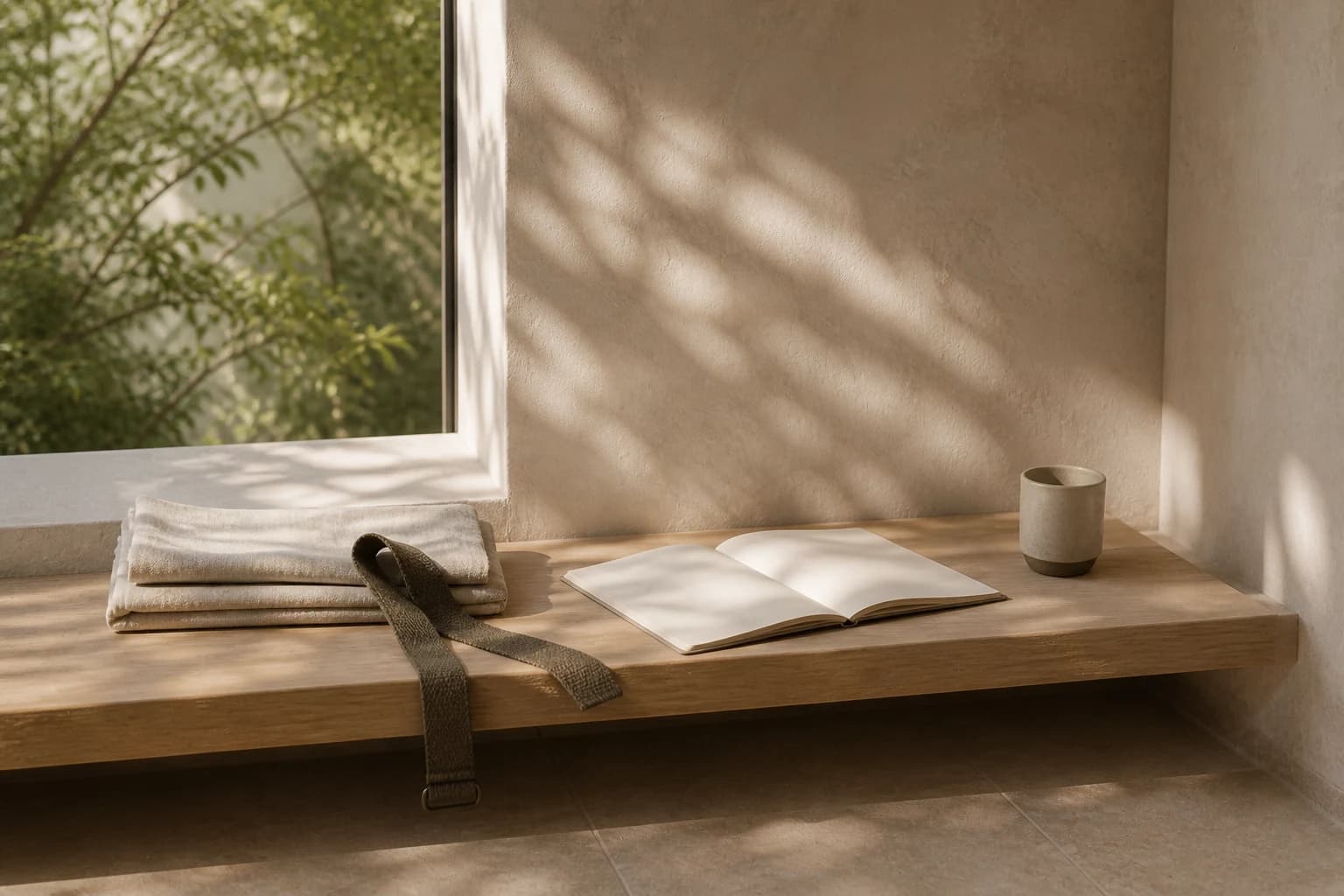
Wellness Living is not about adding more wellness equipment. It reorganizes movement, rest, recovery, sleep, light, material, nature and everyday ritual as one living system.
1. From Wellness Room to Wellness Living
Conventional wellness spaces often begin by adding a gym, recovery device or specialist room to the home. The functions may be useful, but wellness becomes an event that requires a separate place and deliberate preparation.
Wellness Living begins with a person's day: waking, working, sitting, moving, recovering and sleeping—and how those actions relate to light, air, materials and nature. Wellness belongs to the whole living system, not one room.
2. Movement Should Be Distributed
Movement is not limited to a one-hour workout. Stretching, walking, hanging, mobility, light strength and postural change can be distributed through entrances, living areas, bedroom suites, gardens and work zones.
That does not mean displaying equipment everywhere. Useful movement opportunities should be integrated into furniture, walls, paths and storage. Movement becomes easier to begin and quieter to live with.
3. Recovery Is Part of Everyday Space
Recovery responds not only to training but also to stress, sleep, sitting, travel and attention fatigue. A place for breathing, resting, warmth, massage or low-stimulation light may be used more consistently than a dense recovery room.
The key is low friction: quiet, privacy, simple storage and the ability to begin naturally for ten minutes.
4. Furniture Can Become Infrastructure
Furniture can do more than support sitting, sleeping and storage. It can organize movement, support postural change, conceal training accessories and make room for future modules.
Wellness Furniture is not fitness equipment wrapped in timber. It must answer questions of human use, structure, safety, maintenance, materials and spatial language. KOVAEN Wellness Wall is research at that intersection.
5. Nature Is Functional
Nature does more than create a view. Daylight shapes rhythm, planting and air change how a place feels, and accessible outdoor space supports walking, movement, recovery and social life.
Indoor-outdoor relationships therefore need to be designed as deliberately as furniture and equipment—not added as decoration at the end.
6. Technology Should Become Quieter
Wellness technology can measure, prompt, regulate the environment and support recovery, but it should not turn a home into a control room. Sensors can recede, interfaces can appear only when needed, and devices can relate clearly to light, temperature, air and daily habits.
Quiet technology is valuable when it reduces friction and makes better choices easier, not when it demands constant attention.
7. The KOVAEN Perspective
KOVAEN sees Wellness Living through four interacting layers: Living × Movement × Recovery × Environment. Spatial design creates relationships; furniture and equipment support behavior; materials and nature shape long-term experience; technology enters only when it genuinely improves use.
This is not a fixed style or product list. It is a framework for judging whether each element makes life clearer, more sustainable and easier to move through and recover within.
Wellness should not occupy more space.
It should make space work better.